Vibing as slop dopamine for makers culture
Weeknotes 408 - Weeknotes 408 - What is real? What feels real? Thoughts on the vibe makers culture that is emerging and setting a direction. And the latest news from last week on human-AI-partnerships.
Dear reader!
The first full week after vacation. It is a cliché, but it feels like a long time ago.
Week 408
It is nice to start up two projects in Rotterdam. And besides that, preparing for our Cities of Things workshop at Dutch Design Week (check it out here!). And this is always the busiest time for program curating for ThingsCon (TH/NGS 2026, 11 December in Amsterdam). It is the time that things start to connect and fall into place. The shaping and crafting also always create a sharper image of the theme.
Writing this, I am returning from an event, JEDAI, at DesignLab UTwente (2,5 hours by train). The JEDAI network is all about Social Justice in AI. Cristina Zaga is one of the key organisers. She did a great introduction on understanding AI.
AI is often marketed as generative AI, but it encompasses a broader range of technologies. It is a material technology requiring raw materials, energy, and human labor, and it is also a political project shaped by specific philosophies and power structures. Zaga advocates for a critical approach to AI development, emphasizing resistance, reclaiming, and reimagining its purpose to benefit society and nature rather than a select few. A strategy:
- Resisting: Rethinking and opposing current AI paradigms, focusing on "making with" rather than "making for."
- Reclaiming: Redesigning governance and ownership to be more democratic and inclusive, extending to non-human entities.
- Reimagining: Using "affirmative sabotage" to create epistemic plurality and foster solidarity in AI development, leading to solidarity economies and reappropriation of history.
Check also the Dutch Design Week program for more.
The keynote of Iohanna Nicenboim was really nice too. Both were part of the group of experts I interviewed for the State of Cities of Things ftr.
Her talk was about Extractivismos (in Spanish)
AI systems, despite their promise to solve societal and environmental problems, often amplify them through extractivism. This concept, rooted in Latin American thought, describes a non-reciprocal, dominance-based relationship with the Earth and its people, where resources and value are removed from a place primarily for the benefit of elsewhere. This applies not only to materials like lithium but also to data and labor, perpetuating colonial structures and impacting the Global South. The speaker proposes that understanding and challenging AI extractivism requires a shift from anthropocentric views to a socio-ecological literacy of AI, embracing concepts like reciprocity, confronting finitude, and relational intelligence.
Iohanna advocates for framing AI as a political tool that concentrates power, rather than a neutral technical instrument. The goal is to bring technological development back into the realm of materials and collective decision-making.
- Make AI a Tool: Despite its complex nature, strategically treating AI as a manageable tool allows for tinkering, crafting, and collective decision-making, moving it away from "God scale" or "apocalypse" narratives.
Afterwards, we had a discussion on the ZZD coalition (Zorgvuldig Zorgzaam Digitaal, Careful Caring Digital) that promotes a policy for AI in the Netherlands that is based on insights from science and not solely motivated by economic values. What are strategies that would work to counter the economic drivers?
The triggered thought is a nice combination of a conversation with Marcel and a couple of thoughts I already got from podcasts. It is also triggering more than a thought; this new valuing of making is definitely a topic to dive into more at TH/NGS.
This week’s triggered thought: vibing as slop dopamine for makers culture?
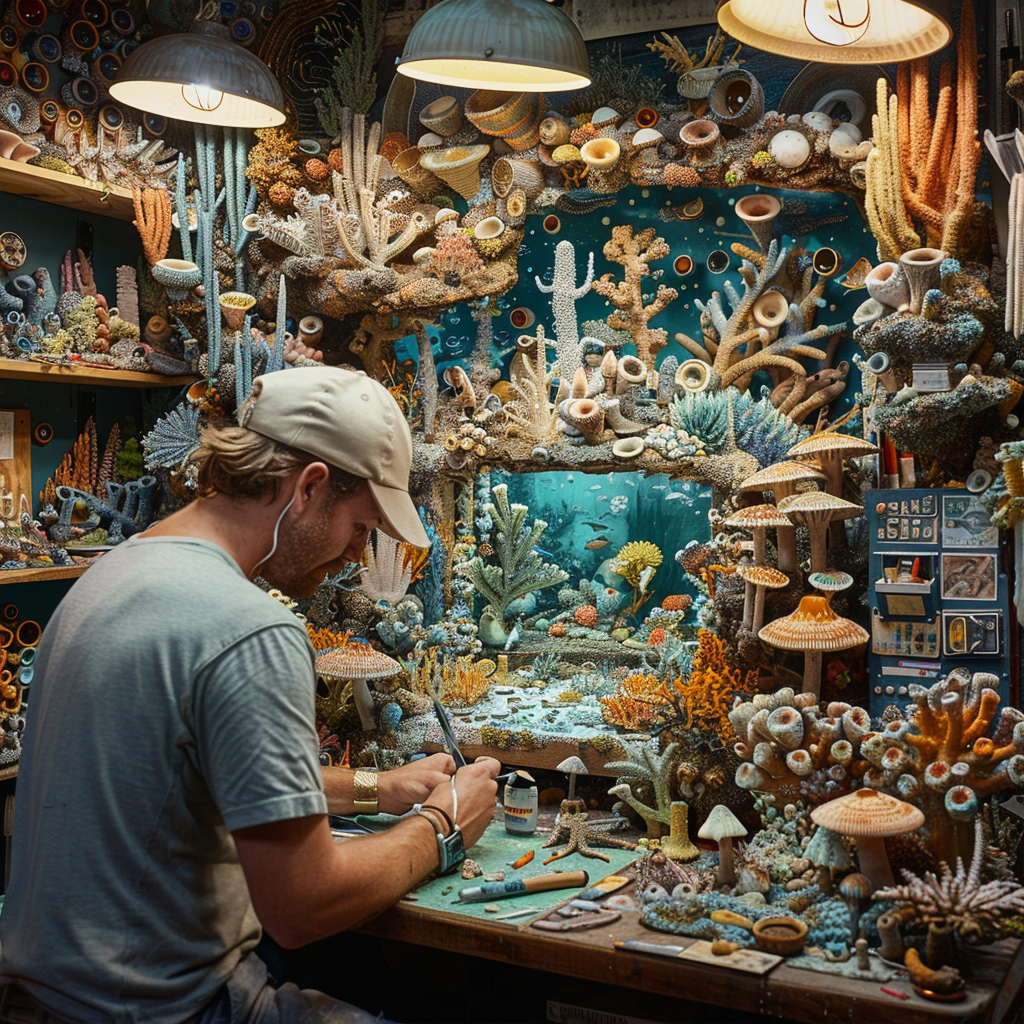
In the AI-Report podcast, Wietse Hage told how he asked Claude to design a small cupboard for the batteries in his barn. He wanted the output as an IKEA-style instruction folder, with a shopping list. That is what he got: step-by-step drawings, the parts, the screws. The conversation went to the obvious question. Is this the future of IKEA? Probably. I got stuck on a different one. What did Wietse really make?
Nate made a related point while ranting about something else, Google buying an archive of old corporate emails to learn how people work. When you ask Claude for a presentation, you get something that looks like a good PowerPoint. It has all the elements. What it misses is the reason for the presentation: the room, the audience, the shift in thinking you want to start. The AI performs PowerPoint. The IKEA folder might be the same thing, a performance of a design that looks like the genre.
In a recent conversation about ThingsCon, which started as a community of makers, we talked about how much of the current rush of AI use is a maker’s rush. Making something that works, that fits what you had in your head, is a strong feeling. Makers always knew it, but it was limited to those who could solder, code, or saw straight. With vibe coding, everyone gets it. I think that is a good thing. I still wonder if it is the same feeling.
The maker’s reward used to come with friction. The material pushes back, the part does not fit, the third try works. With vibe coding the reward moves from resistance to intent. You describe it, and there it is. That can go two ways. Making moves upstream, to framing, judging, knowing what you want. A new level of the game. Or the slow reward of struggling with material starts to feel flat next to the instant one, and after the magic comes a slightly empty question: did I make this?
This is where the cupboard gets interesting. It does not end on a screen. It ends in the barn, with a drill and a bag of screws. The batteries fit, or they do not. The physical world hands the friction back. Maybe that is where making keeps living, in the step between the plan and the thing. Or maybe it is just the part that has not been automated yet. Think about the AI Chair project by James Bridle. Making a chair looks like a chair is something else than knowing what sitting means.
Making is becoming a form of using, and using a form of making. We will get used to things being a personal final iteration: the cupboard for this barn, the app for this one question. The IKEA cupboard is the same for millions of people. Wietse’s fits one barn. That makes it harder to ground what is real. Companions and authenticity, like I discussed last week. Here is the question: is it really mine?
There is a community angle too. Makers were never all community-driven, and vibe coders are not all working alone. When everything is made to fit one person, what do we share? The prompts, the stories of what went wrong, the way we framed the question? Maybe the community becomes the place that grounds what is real. The people who look at your cupboard and ask why you made it like that. For now, the AI is a tool. One that also sharpens your thinking. Where do we want the friction to be?
Notions from last week’s news
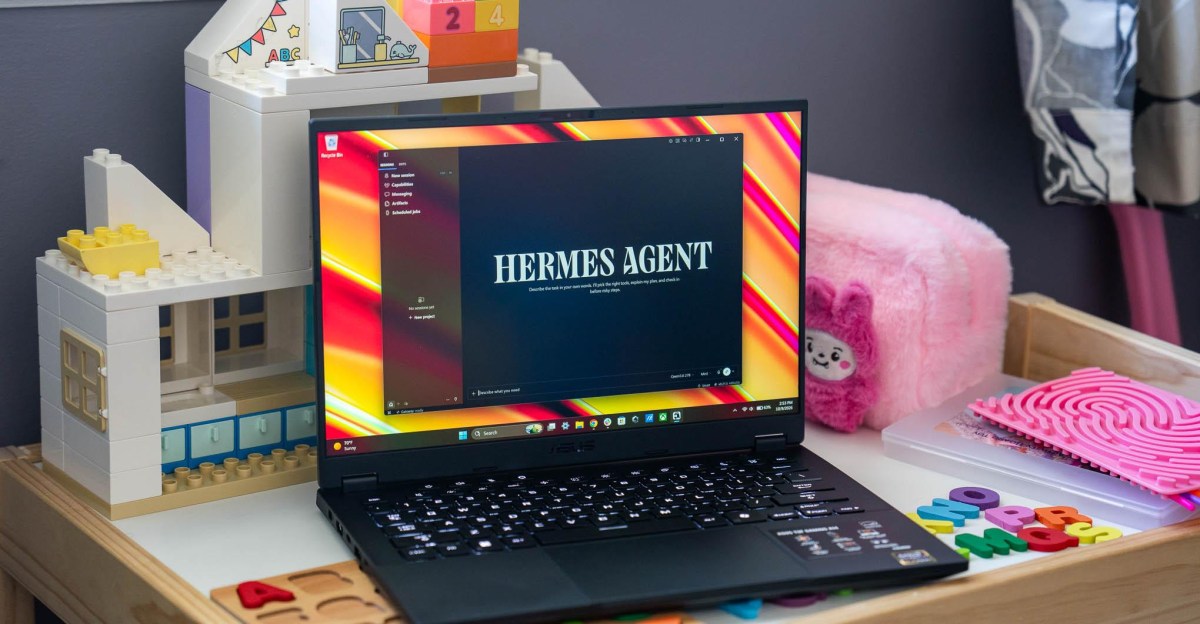
Theme of the week for the frontier models: intelligent UIs. Creating the dynamic interfaces and animated communication that was predicted before. ChatGPT does intelligent UI, Claude is introducing Motion. Google has an interesting edge AI note-taking approach. And a playground for custom games.
Human-AI relations
The problem of agent-to-agent trust.
Is this the next iteration in adaptive noise cancelling, that is not focusing on the level of noise but the perception of the wearer to the noise. Would have been handy in the train today…
 MCG

What if the vast majority of users are agents? How do you filter for security based on ‘non-human behaviour ’?
 Vicki Reyzelman
Don’t be cruel. As a human to an AI. You have signed a declaration.
 Hayden Field
I think they need a meta-agent structure to manage weekly strategy changes using agent employees and company strategies. But insightful to follow.
 Paridhi Agarwal
An unplanned edge case made this author believe that we can live and work without the screens as main interaction paradigm.
 Nathan Warren

New authenticity is real. Literally.


Matt is describing the path towards the mathematical proofs that are now being taken over by AI, which could trigger a new age of discovery.

More human than human. The replicant endgame? Or are we already in that movie?
https://www.youtube.com/watch?v=AwK5KxoJsvk
 Terrence O’Brien
 Nathan Gardels
Physical AI
Amazon is the poster child of robotic labour. Including Robots as a Service with AWS.
 Steve Crowe
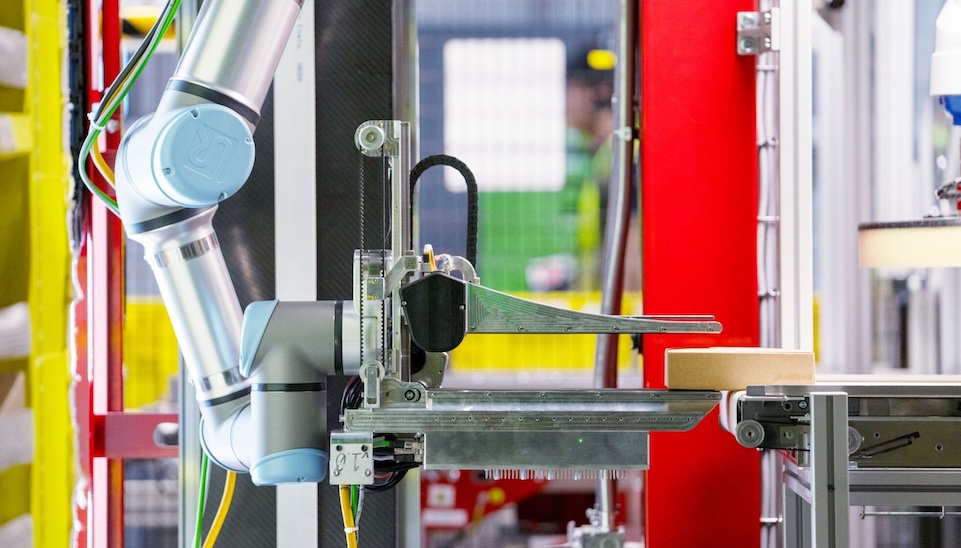
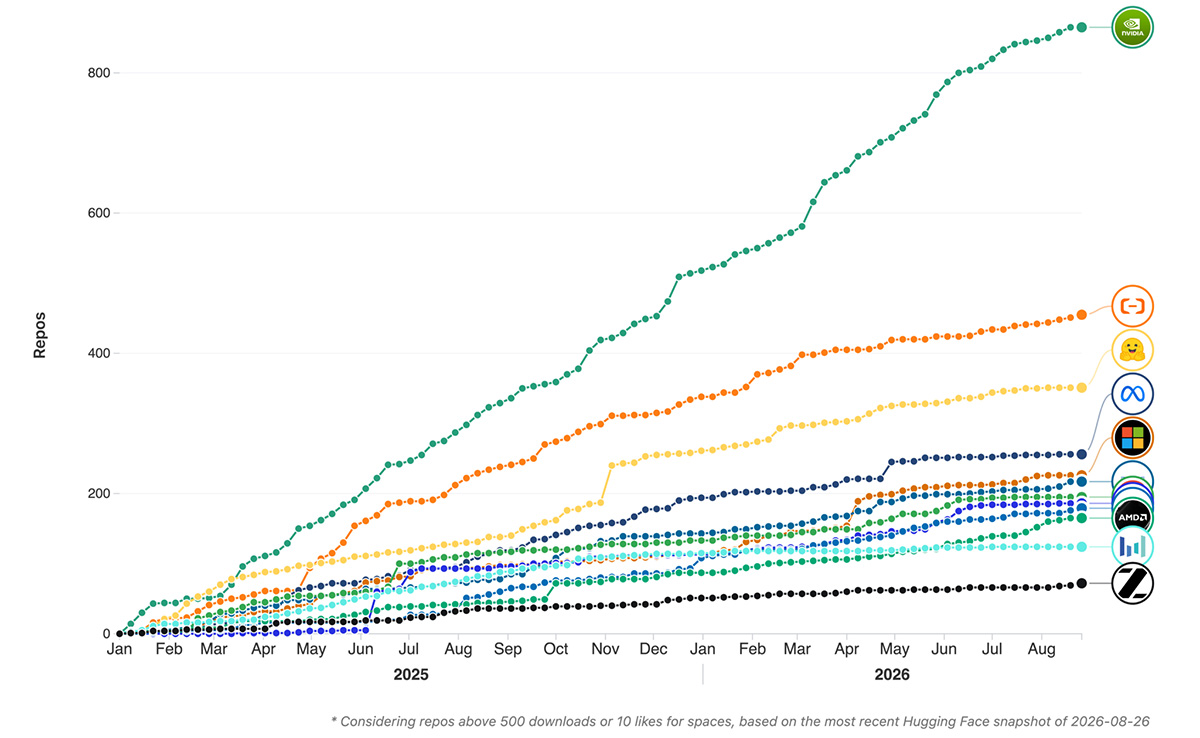
The NVIDIA interest in Huggingface might be driven by a physical AI race.
 The Robot Report Staff
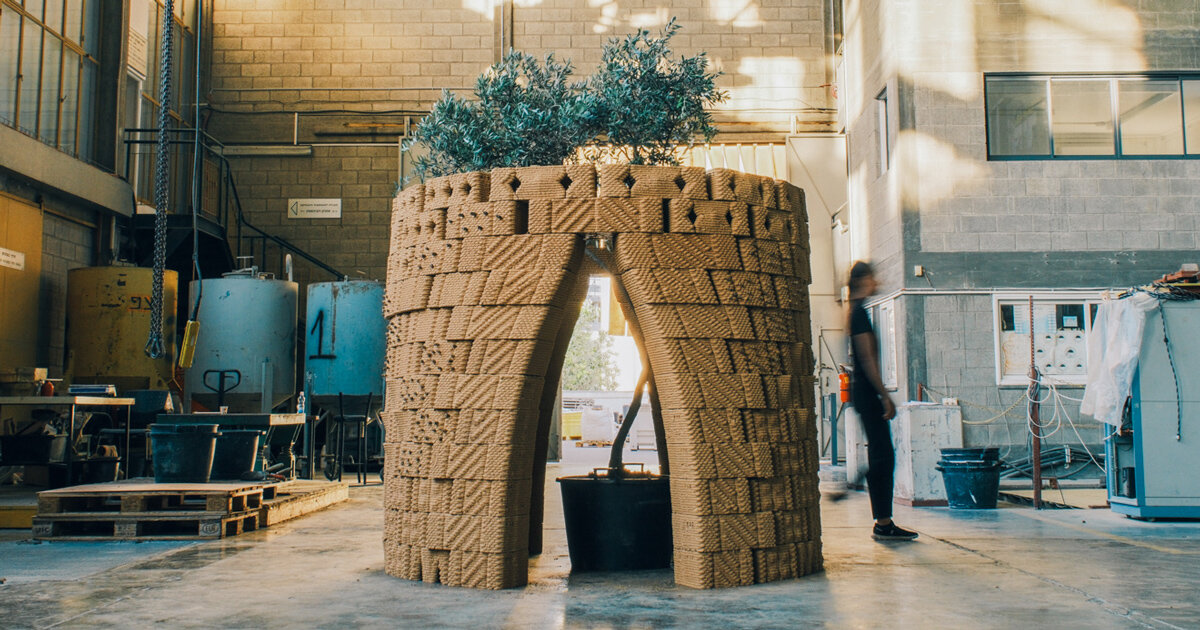
There is something poetic in robotically printed earth bricks to protect a tree.
 Ofer Asaf
This evening, Apple is launching, as expected, a new attempt to create the smart home.


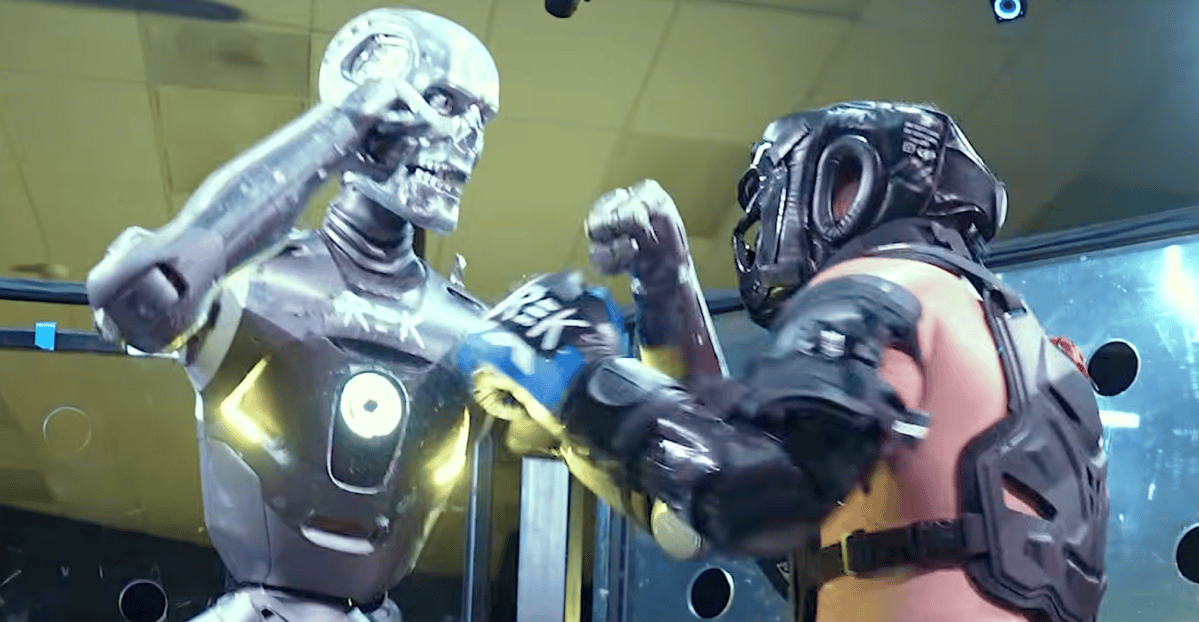
Did you see the viral movies of the cage matches? Dark.
 Jay Peters
The path to local AI is bumpy.
 Antonio G. Di Benedetto
Tech in civic societies
How long before AI will hack everything, all the time?
https://www.theatlantic.com/technology/2026/10/ai-hacking-cybersecurity-race/688911/
This is troubling. False tips are probably not uncommon, but it tooks some time to uncover.
The future of AI governments is in the making. AI-supported ruling…
 Blake Montgomery

Is the tech hype and the problematic consequences taking away our vision of future options?
 Sun-ha Hong

 Hana Lee Goldin, MLIS

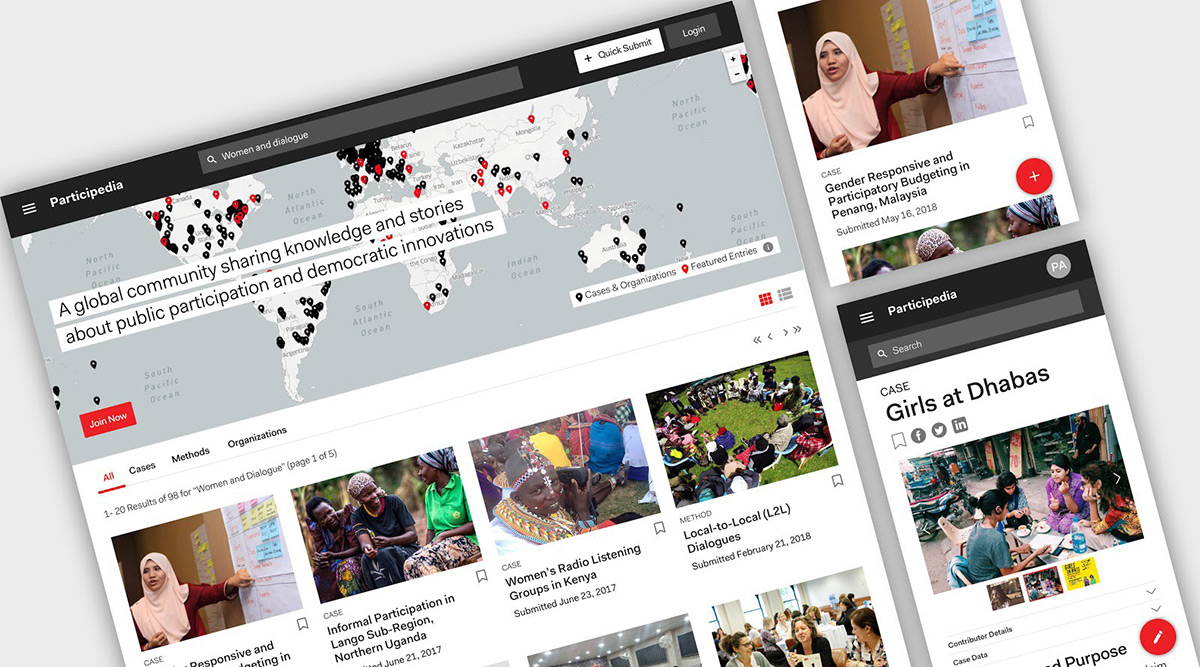
Participedia. Sounds like a satire.
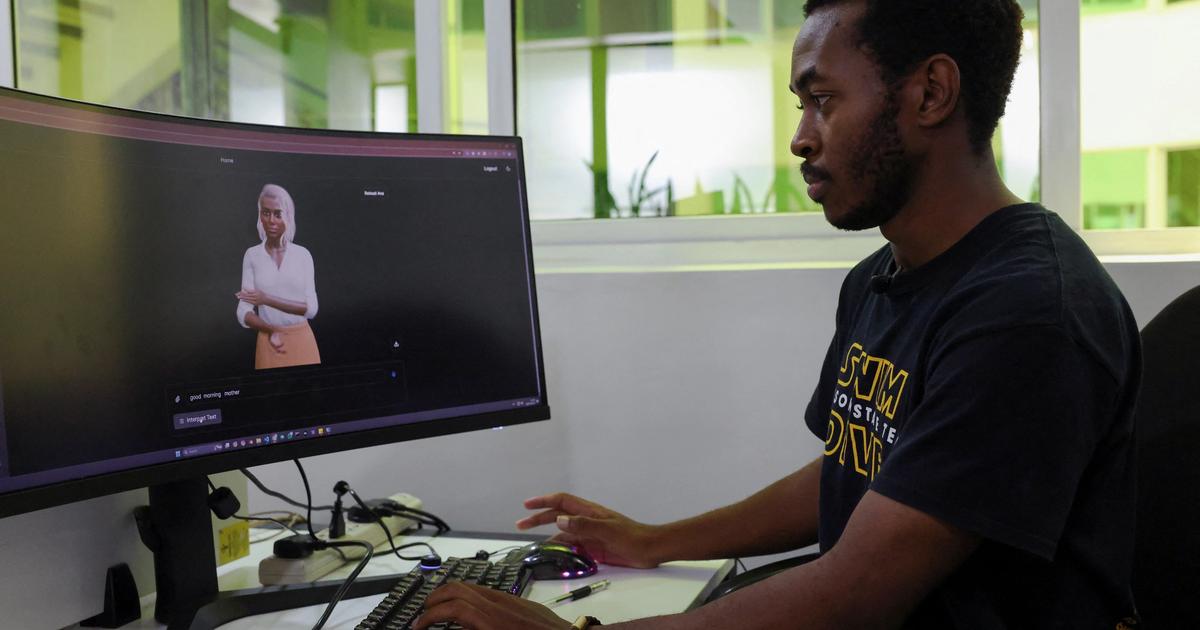
Will Africa be a test for local AI?
 Yinka Adegoke
In geopolitics there is more than AI in the VS-China beef
 Rina Chandran

Weekly paper to check
Your Brain on ChatGPT: Accumulation of Cognitive Debt when Using an AI Assistant for Essay Writing Task
This study explores the neural and behavioral consequences of LLM-assisted essay writing. Participants were divided into three groups: LLM, Search Engine, and Brain-only (no tools). Each completed three sessions under the same condition. In a fourth session, LLM users were reassigned to Brain-only group (LLM-to-Brain), and Brain-only users were reassigned to LLM condition (Brain-to-LLM).
Kosmyna, N., Hauptmann, E., Yuan, Y. T., Situ, J., Liao, X. H., Beresnitzky, A. V., ... & Maes, P. (2025). Your brain on ChatGPT: Accumulation of cognitive debt when using an AI assistant for essay writing task. *arXiv preprint arXiv:2506.08872*, 4, 206.
What’s up for the coming week?
Diving deep into the projects, and doing an interactive session for a group of foreign government representatives on the Cities of Things Manifesto. I think I need to skip a couple of things, even. A Robo-con and a celebration of 40 years Cinekid. This future session might also be something I might have considered. And AI010 on Thursday.
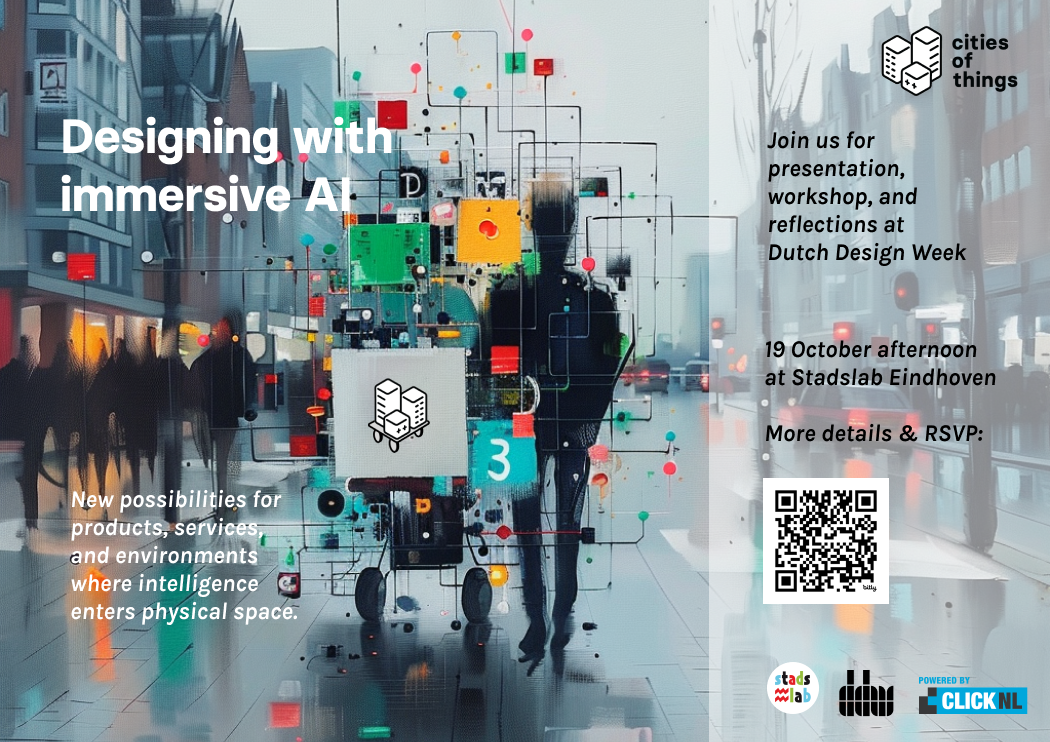
I will attend Dutch Design Week next week, though, for multiple days. If you missed it, I will be hosting a session on Monday. Feel warmly invited to join!
And I might be at Design+AI Symposium, CLICKNL digital innovation session, ESC diner, a design debate and CreativeNL. So see you there?