The screen that speaks for the house
Thinking about how Homeview could be a social object, but misses the point. But opens up a sharper view of what is needed. And also more handpicked news from last on human-AI-things relationships as always.

Dear reader!
This edition has a slightly different format. Monday is usually the day I take time to compose and finalize the newsletter, but this Monday I ran a workshop at Dutch Design Week. So I spoke this introduction into my phone on the drive back from Eindhoven. The triggered thought was already set up earlier in the week. Normally I go back and forth on it a few times; this week I kept that to the bare minimum. The same goes for the links: they are the ones I came across, not the result of going through all the sources I usually follow.
Week 409: Dutch Design Week workshop and thoughts on a social object in your house
Looking back on the week, it was busy with all kinds of things, including two workshops. One client one, with a focus on speculative design in context of the Cities of Things Design Manifesto, and yesterday one at Dutch Design Week, where I connected the same speculative design canvas method with a Wijkbot making exersize / performance. It was a lot of fun!
It was a small group of eight, a good mix of people from academia, practice, and smaller and larger agencies, from The Netherlands, USA, and Germany. After a presentation that sparked some good discussion, they used speculative design to imagine critical objects for the street, with Lego as a building material.
The two teams went in different directions. One imagined an object that turns leftover furniture and other things on the street into a social experience, a kind of moving café. It stayed rather conceptual, but that suited the exercise. The other team made a wearable that turns the grim outside world into a happy place at the push of a button. The hybrid future world-building they have been exploring in the first round was a clear driver. The Cities of Things manifesto was maybe less clearly represented, something to think about for the setup.
My plan was for these Lego designs to become a clear starting point for building with the Wijkbot. I think that still holds, but the translation from a speculative object to a working prototype needs more time than we had. The testing on the street gave good energy again, though there was too little time and too few passers-by to really test the interactions. We had some nice reflections afterwards with new guests for the drinks. The experiment of connecting the two workshop formats has a lot of potential to explore designing with immersive AI, but would benefit from a longer format, maybe in two chapters. Something to think about a bit more.
On to the triggered thought. The social behaving object is returning.
This week’s triggered thought: The screen that speaks for the house
Apple introduced a set of home devices last week. Next to a new Apple TV and HomePod, the HomeView got most of the attention: a square 7-inch screen on a small dome, or flat against the wall. It is cute. The hinge, the shape, the way it sits on a kitchen counter give it a personality. What it is for is less clear.
On Dithering, John Gruber and Ben Thompson described it as something like CarPlay for the home. The comparison helps, partly because it shows where it breaks. In the car, the relation is clear. There is one driver, one task, and the phone’s content needs a different form while you drive. The home is not one person’s context. Several people live there together, with routines, small negotiations, and things that happen to all of them at once.
Their point is that the home doesn’t need apps. It needs services that respond to situations. The doorbell rings and the screen becomes a doorbell monitor. Someone is cooking and it holds the recipe they found on their phone. It could be a family organizer without taking over what everyone does on their own device.
Apple frames HomeView as “central to the home and personal to everyone in it.” That sentence holds the tension. The device recognizes up to six faces and switches to each person’s messages and calendar. The household becomes six individuals taking turns at a screen. It is shared, but it is not yet social.
What would make it social? A social object is more than something people share. It plays an active role in a social structure: a family, a neighbourhood, a community. It holds something of the group that no single member owns, and it shapes how members relate to each other. A family calendar on the fridge does this in a modest way.
One detail in HomeView points somewhere interesting. The interface adapts to your distance, showing less from across the room and more as you come closer. That is the kind of move Apple once made with the iPhone, turning physical qualities like touch and location into a software experience. The hardware seems to understand the room. The software still thinks in apps and accounts.
I recognize this problem from my own work. In the Grid, a speculative scenario I use to explain how a home full of intelligent things might behave, the house has its own rhythms and predictions. Plants are cared for, energy use is balanced against goals, and only now and then does the system surface to the people living there. In my visualizations those moments appear on two handheld screens, one for the plants, one for energy. Looking at them again, they are dashboards and settings panes. Recognizable, but they miss what the scenario is about. When I present it, I always explain that the screens should show the relation between the people and the things. I never designed that relation into the image itself.
So the open question is not only Apple’s. If a house starts to observe, act and predict, what does its screen show? The status of devices, or the state of a relationship? And whose voice is it? Does the house address the family as a whole, whoever happens to stand in front of it, or speak on behalf of the person who set it up?
There is a hopeful version, where a shared object supports family life instead of splitting it into accounts. There is also a version where the entry ticket to the household is your face. What about the guest, the child too young for an account, the cleaner, the neighbour who drops by? A home is never only its registered members.
Maybe the design challenge for this kind of device is less about the screen and more about how to represent a relation: between people, between people and their things, and between a household and the intelligence it lives with. Who gets to shape that relation is worth asking before these devices arrive in kitchens next month.
Notions from last week’s news
This week, a bit shorter list. And with fewer reflections, due to time squeeze.
From the frontier: Self-replicating models on the edge, Open-weight agents, Amazon new-bees, Google and Meta catching up,
Human-AI relations
Teaming up in times of agentic coding.
 Dhruv Deshpande
 Alex Usher

Expecting goofy AI characters.
Writing skills will find new roles.
 Matt

Loss of human connection as the dangerous offset.
 Guardian staff reporter
A humanist AI code.

 Becky Ferreira
Agent super intelligence
 Ramez Naam

Physical AI
Cyber-attacks in fridges, the new IoT fridge meme?
 Emma Roth

Context engineering.
 Mike Taylor
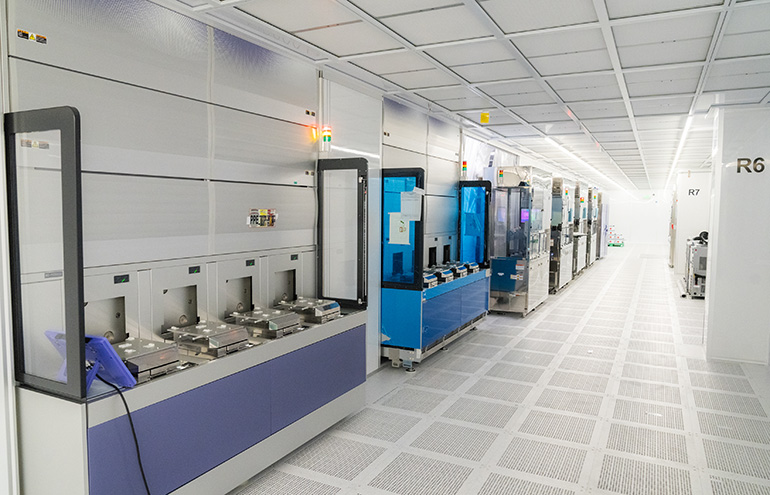
A robot scale-up production line
 Courtney New
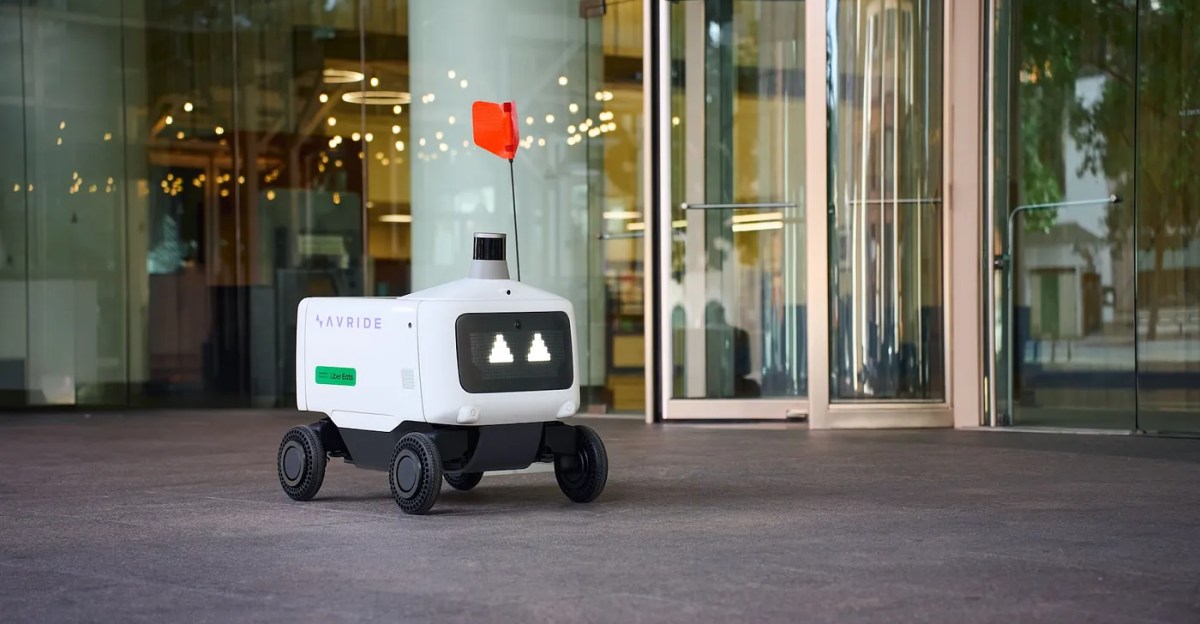
A tipping point?
 Terrence O'Brien
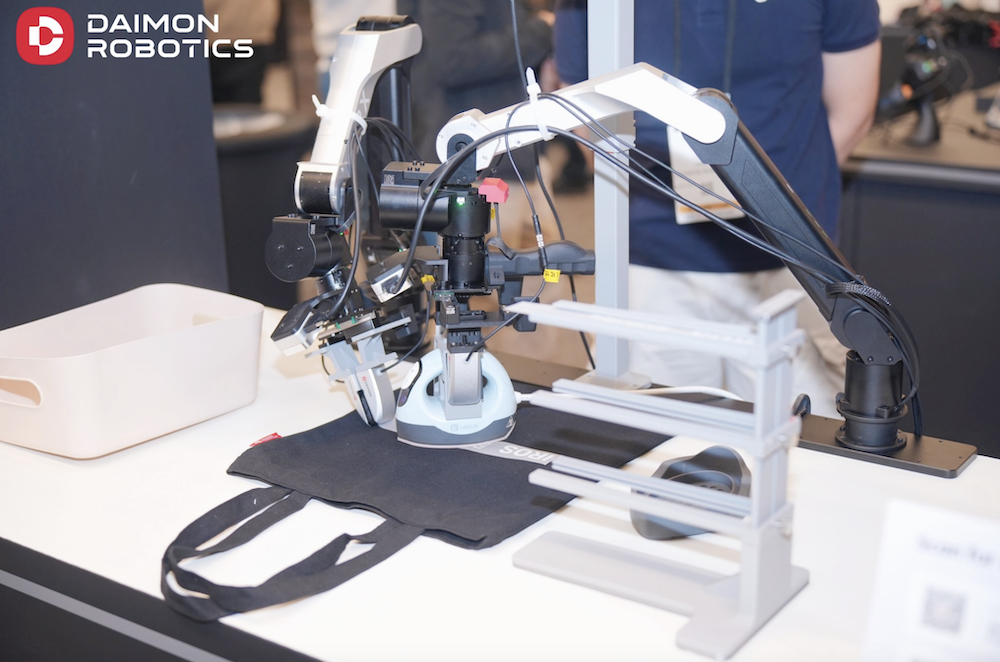
In AI in human senses perspective.


Humans impersonating machines.
 Jason Kottke

 Steve Crowe
Tech in civic societies
Edge AI for smart cities.


More crisis signals. Or not?
 Shelly Banjo
 Reed Albergotti

 Elizabeth Lopatto

World leveling small AI?
 Heather Stewart

Agency crisis.
 Peter Lewis

Energy challenges
How the present eats the future.
 Nathan Gardels

Paper for the week
Characterizing Agentic Flooding of Government Services
Schmitz, C., Hammond, L., & Chan, A. (2026, October). Characterizing Agentic Flooding of Government Services. In Proceedings of the AAAI/ACM Conference on AI, Ethics, and Society (Vol. 9, No. 4, pp. 2266-2278).
https://doi.org/10.48550/arXiv.2608.16603
What’s up for the coming week?
I did not check all the calendars, but I captured some during the week. Of course, there is more DDW, and I will join Design+AI symposium today with ao Maria Luce Lupetti keynoting, present a conversation starter at the ESC dinner, see Kars Alfrink at CLICKNL digital innovation sessions, w workshop ‘Bewoners in-the-loop’ and join the Next Nature design debate.
Also this week, what I will miss. Algorithmic decision-making in Pakhuis Amsterdam. Next week, I will be on a panel.