Ambient presence in AI cities. For whom?
Ambient presence in AI cities. For whom? Weeknotes 413 - Wondering about different concepts of Ambient AI, from city or citizen perspective. And beyond. With links to news in human-AI relations from last week.

Dear reader!
So this is edition 413. I have been writing it for more than eight years now. I haven't welcomed new readers in a while. Not so nice :-) Welcome! As a super short introduction: I mainly focus nowadays on the relationship between humans and AI: how we are going to live with AI and other intelligent technologies, especially as they enter the physical world and the things we use. That links to Cities of Things, the expertise centre I run, but the scope here can be broader. It covers AI itself, how it shapes our relationships, and robotics. Not so much humanoids, but the mundane robots becoming part of everyday life. My background in design and IoT also plays a role, and ThingsCon, which I have organised for 12 years, runs alongside it. Check the latest on the program for this year’s conference. Especially for my subscribers, I can offer a 30 eu discount with code TC2026-Subs-30
What I work on
Maybe nice to share too. I have been working independently for a few years now. Recent work includes the new Manifesto for the Cities of Things, self-published in March, and research on citizen protocol economies: how technology can support commons and communities. That project is still running, and we are looking for ways to bring it into practice and find funding. Current assignments: advising on the design of a community of practice inside a municipality, working with citizens on the role of AI in their social context, and serving as a smart mobility expert for a Dutch province. My calendar is full this year, but I have room for new assignments in 2027. If something here connects to your work, in business or education, get in touch!
Week 413: Ambient presence in AI cities. For whom?
I worked on the three assignments. We finished the report on smart mobility for the province. With citizens in the Social AI project, I ran an ideation session that built on the first session: mapping a journey, building with Lego, and using AI to visualise the ideas so they became tangible. Tomorrow we start vibe coding parts of it. For the community of practice I did more interviews and started planning a session and outlining the report. I also visited a small event on slow AI, from a media research angle with a focus on visual communication. A nice mix of art and research, though not much to report here.
This week’s triggered thought follows discussions on the ThingsCon sessions and the hackathon/makeathon: what to build, and what could actually contribute to the thinking.
This week’s triggered thought
This week I read an article about Apple’s expected AI glasses that framed them as the start of a new wave of “ambient AI”. Smart glasses are not new. We had this moment around 2013 with Google Glass and the first wave of wearables. What has changed is what the glasses are talking to. The environment we move through is slowly filling up with intelligence: physical AI in robots and delivery carts, buildings that respond, and digital twins that turn a street into data and back again. We move through this new space with our own bodies, and it makes sense that we look for something to translate it for us.
But “ambient” can mean two quite different things.
In the first meaning, the ambience is something you wear. A personal device reads the surroundings and tells you what matters, filtered for you, through a platform owned by one company. The city stays mute, and your glasses do the talking.
In the second meaning, the ambience belongs to the place. In a scenario I wrote earlier for Cities of Things, you walk into a building where each thing runs its own small model. Together they form a network, and you start to sense how the building is doing. It’s a vague, almost eerie feeling, not a notification. Nobody translates it into a personal feed. It’s simply there for anyone who enters.
These two meanings lead to very different cities. I have been thinking about this through a concrete place, the Marineterrein in Amsterdam. Defence still uses part of it, the rest has been handed back to the city, and it is now mostly offices. On a summer day it fills up with swimmers, people having lunch, and people walking through on their way somewhere else. At night some people sleep there because they have nowhere else to go. Almost no one who uses the place has a formal relationship with it.
So what would it mean to give such a place an ambient layer of the second kind? Not to track who comes and goes, but to give passers-by a sense of being part of something, maybe even something they’d want to look after. In a project in Rotterdam, residents came up with a similar idea: small, local physical objects that quietly connect people who would otherwise stay apart. It’s no frontier model, just a few things in a neighbourhood with a bit of intelligence.
Here it gets uncomfortable. For a swimmer, a place that senses your presence might feel welcoming. For someone sleeping on a bench, a place that “knows” you are there can feel like a threat. The same layer can be care or control, depending on who you are and who holds the data. Any design for shared presence has to start with that difference, not discover it later.
The open web became proprietary once social platforms arrived. If ambient AI arrives mainly through glasses and earbuds, public space could go the same way: personal and closed, with everyone in their own version of the street.
The other route is smaller and slower: local models on local things, networks that keep working when the cloud doesn’t, presence you can notice rather than presence that disappears into the background. That last point is interesting. We tend to praise interfaces for removing friction. But maybe a shared ambient layer needs a bit of friction, enough that you know it is there and can question it.
I don’t have the answers. I would like to know how such a place should feel. What things could carry that layer, and who gets to decide what it notices? And is “slow” what keeps ambient from turning into surveillance?
Notions from last week’s news
The NVIDIA soap was all over the news this week. Not something to cover here I think, however it might impact the AI umfeld for sure. “The NVIDIA Scandal Goes Deeper than you Think” is the typical response.
For the rest, the IPO of Anthropic is highly anticipated.
Human-AI relations
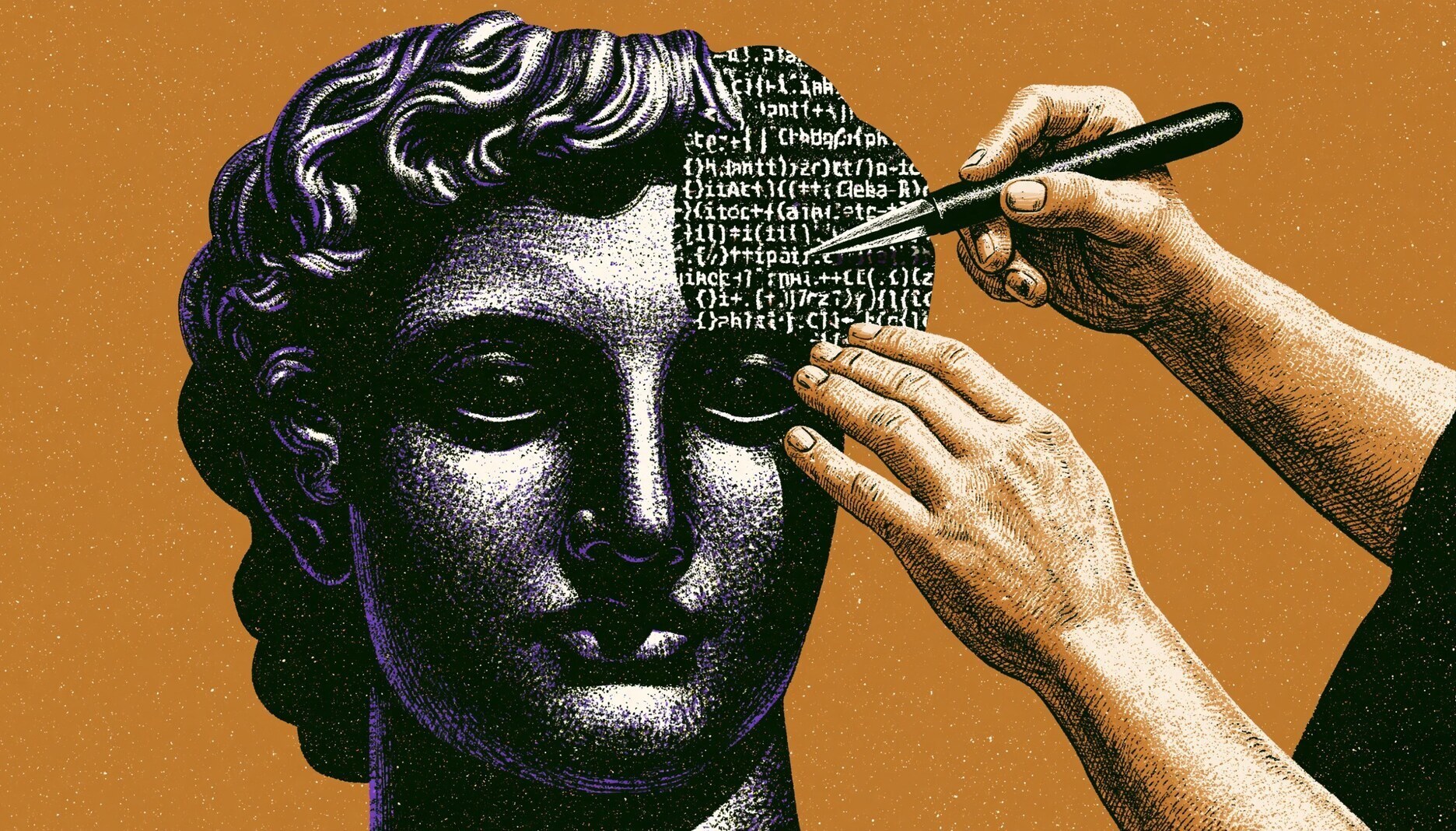
Ubiquitous AI models in all will trigger the need for artisanal thinking. And develop your curiosity.
 Grant Harvey
 Rob Horning

Human-pilled AI is what we need, according to Tim.
 Tim O’Reilly

How will the first agent-driven holiday season look like?
 Jake Angelo
Swarming agents. Next level.
 Ben Bariach

A model that reads between the lines.
 J.D. Capelouto
This is what I discussed last week (or the week before) in relation to the digital legacy session.
https://www.theatlantic.com/technology/2026/11/people-keeping-ai-partners-alive/689380/
Definitely. The attention came is not gone, just changed.
 Grant Harvey

 Christoph Trattner

Build AI for generating relations not content.
 Richard Reisman
Bots used to be the enemy but now they are our partners. But not always excepted.
Physical AI
Vertical developing devices.
 Stevie Bonifield

I hope these Ring cameras will not be populating as fast as the fixed cameras…
Tech in civic societies
Concerns about AI in Dutch politics.
The new form of lab break-outs will be done by the AI?
The battle with hostile enemies online is continuous.
 Grant Harvey
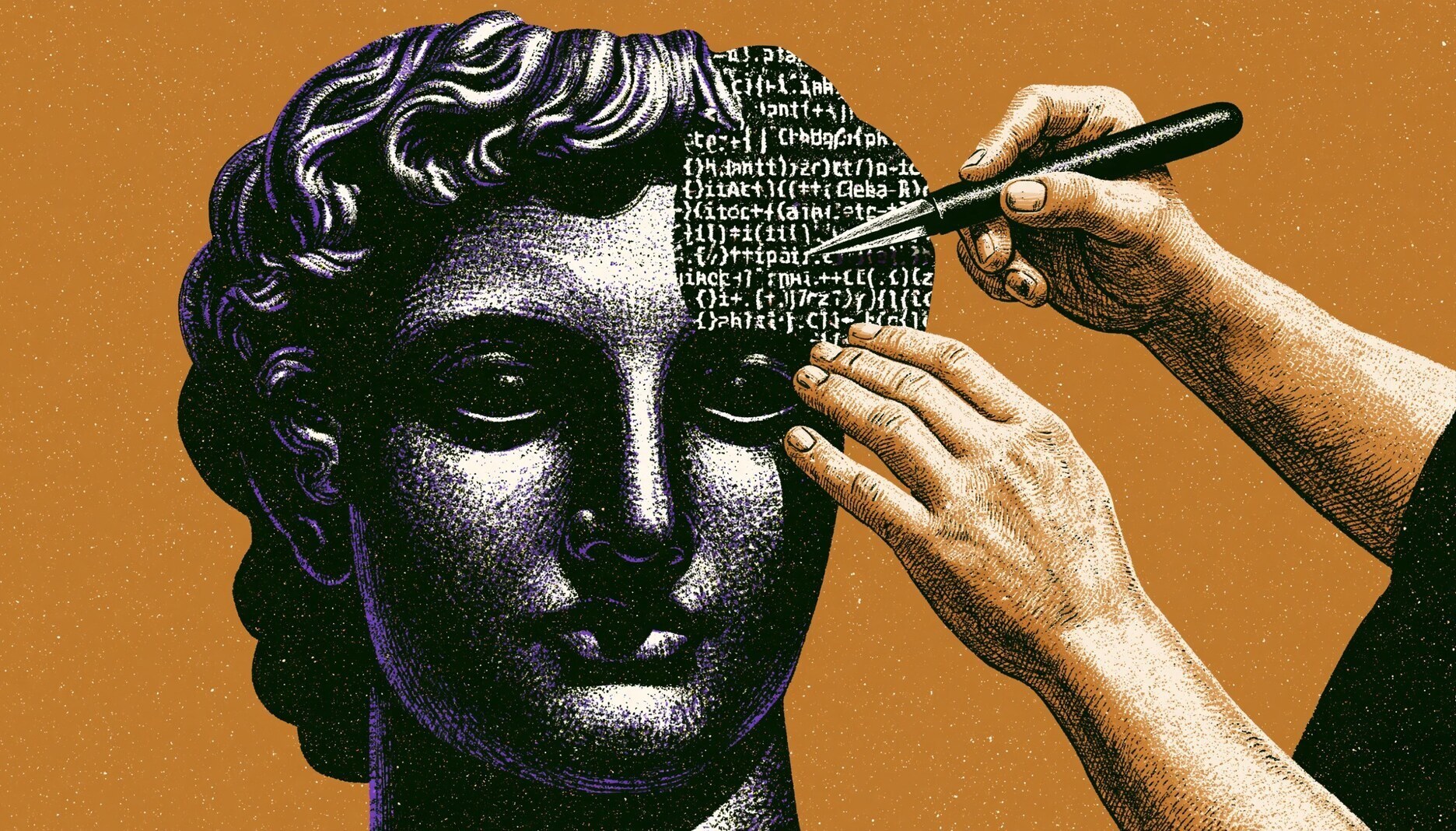
The role of UN in AI rights
 Merve Hickok and Marc Rotenberg and Ren Bin Lee Dixon and Idil I. Kaner and Tatjana Titareva
Who is responsible?
 Allison Stanger and Bruce Schneier
 Stevie Bonifield

This is not comforting, or do we see it as just a new factor.
https://arstechnica.com/ai/2026/11/ai-is-the-most-likely-reason-youll-die-openai-board-member-warns/
What is the verdict by Gen Z on AI?
 J.D. Capelouto

The Dutch government has defined a piece on AI, and critics are relevant to read.
Weekly paper to check
Chinapunk: Chinese Visions of a High-Tech Future
Not only are works like Liu Cixin's "Three Body Problem" improving China's soft power worldwide, but they also arguably provide a glimpse into the true opinions of the Chinese leadership on sensitive issues like the U.S.-China rivalry and technology regulation. Thus, given how difficult it is to understand and to anticipate the Chinese state's policies, Chinese science fiction (or "Chinapunk") should be seen as a valuable source of such information.”
Ko, Justin, Chinapunk: Chinese Visions of a High-Tech Future (October 31, 2026). Available at SSRN: https://ssrn.com/abstract=7687161
What’s up for the coming week?
The vibe coding session with the citizens. Results of the mesh networking project commissioned by the municipality of Rotterdam, for which I was interviewed. On Friday, if time allows, there will be a workshop around the book Design Doing, published about six months ago. I’m curious what Guido is up to.
Other events that I am skipping: Holistic Technology Salon opening (Rotterdam), CRCL Fest on the doughnut economy (with Kate Raworth), 15 years IoT London (congrats Alex!).